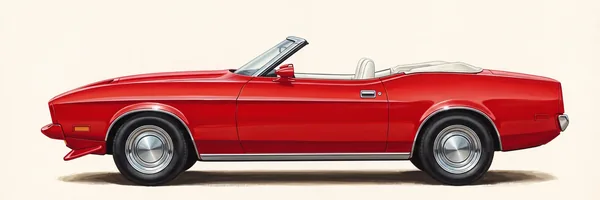
A 1972 VIN has 11 characters. Type one in, and the decoder reads it against the code tables on this page.
2F05Q100001 · The Mustang Source's sample: a 1972 Dearborn-built Mach 1 with the 351 Cobra Jet. Maine Mustang's sample, «2HO1Q100001», has an H where the plant code belongs.
Every conflict we found for 1972, and how we settled it. All rulings.
Settled
1972 production
Our ruling: We use 125,093, the sum of rows that each have at least two independent sources: 6,401 convertibles and 15,622 fastbacks (CJ Pony Parts and Over-Drive), 18,045 Grandés (Maine Mustang and CJ Pony Parts) and the hardtop and Mach 1 figures, which Maine Mustang, CJ Pony Parts and Over-Drive all give. 6,121 is exactly the 1971 convertible figure, and 16,622 is 1,000 too high, the same slip as the 1965 hardtop figure. 125,093 is also MustangSpecs' 125,903 with two digits swapped. MustangSpecs' rounded 28k Grandés and 33k fastbacks fit none of the lists. Statistics copyrighted and courtesy of Marti Auto Works.
What each source says (5)
6,121 convertibles and 16,622 fastbacks; total 125,81324one source
125,903 in total; 6,401 convertibles; «Grande versions (28k units)»; «The Fastback as base and Mach 1 sold about 33k units»7one source
15,622 SportsRoofs and 6,401 convertibles; the rows add to 125,0938one source
15,622 SportsRoofs, 6,401 convertibles and 18,357 Grandés; no total1one source
Settled
How much production fell in 1972
Our ruling: MustangSpecs computed the fall from its own 125,903. With 125,093 it is 16.4 percent against 149,678, or 17.4 percent against 151,484 with the Boss 351.
What each source says (1)
«Total production was down 15.88% year on year … from 149,678 units in 1971»7one source
Open
1972 net ratings for the 250 six and the 302
Our ruling: Unresolved: 95, 98 or 99 hp for the six, and 140 or 141 hp for the 302. Over-Drive's two figures are the ones Maine Mustang gives for 1973.
What each source says (3)
L = 250 six, 98 hp; F = 302 2-barrel, 140 hp24one source
L = 250 six, 95 hp net; F = 302 2-barrel, 140 hp3one source
Dearborn, San Jose and Edison/Metuchen for the whole 1971–73 generation3one source
The year in brief
Over-Drive says Ford now billed the Mustang as its Sports Compact, with the Mach 1 as the performance line. Two 351s sat at the top: the Cobra Jet, held to 266 hp net, and the HO, which Wikipedia describes as a slightly detuned Boss 351 that could be ordered from mid-year on any model. Only 398 Mustangs got the HO, all built in Dearborn, each with the top loader four-speed, the competition rear axle and no air conditioning, and with the first full-time cold air induction in a Mustang. Wikipedia calls 1972 the end of Ford's special performance engines. Smaller changes: every car got a Fasten Seat Belt warning lamp, and a revised Decor Group let coupe and convertible buyers order two-tone lower paint, the Mach 1's honeycomb grille and its urethane bumper.13
From 1972, US carmakers rated engines in net instead of gross horsepower. The 302 went from 210 hp in 1971 to 140 or 141 hp, with no real change to the engine.1311sources disagree
Production fell 17.4 percent to 125,093 (our sum of the rows), from 151,484 in 1971.129
Maine Mustang's 1972 table, which The Mustang Source prints too, has two wrong rows: its 6,121 convertibles is the 1971 figure, and its fastback figure is 1,000 too high. See the ruling below.124
Ford sold a white-and-blue Sprint package for the 1972 Olympics. How many fastbacks got it is disputed.4one source
The story of the year
The Olympic Sprint
Ford marked the 1972 Olympic Games with a Sprint edition of the Mustang.412
It was released between March and June 1972, and the Pinto and the Maverick got Sprint editions too.3one source
Sprints were white, with blue paint on the rocker panels, blue hood stripes and a USA shield on each rear quarter panel.3412
How to spot a 1972
What tells it apart from a 1971.
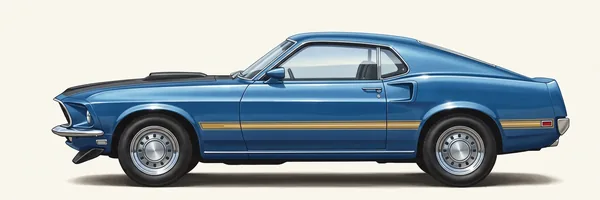
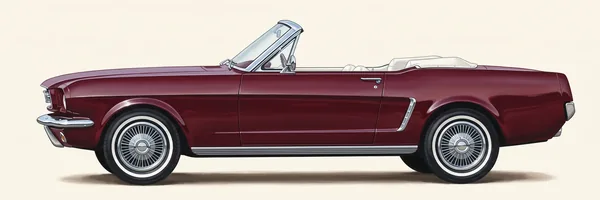
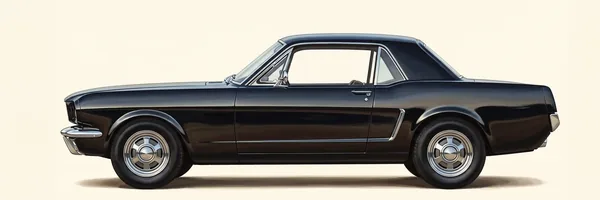
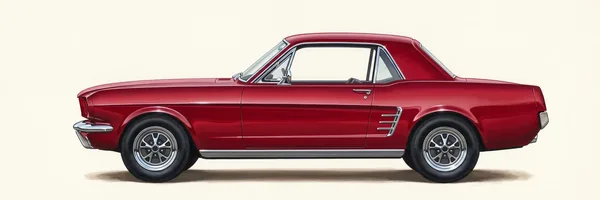
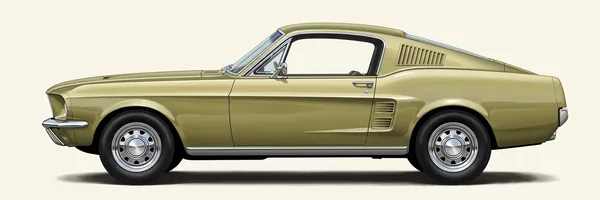
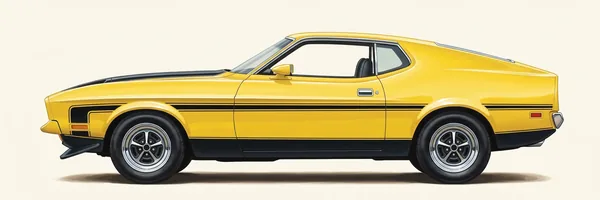
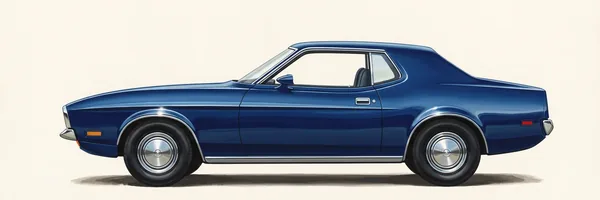
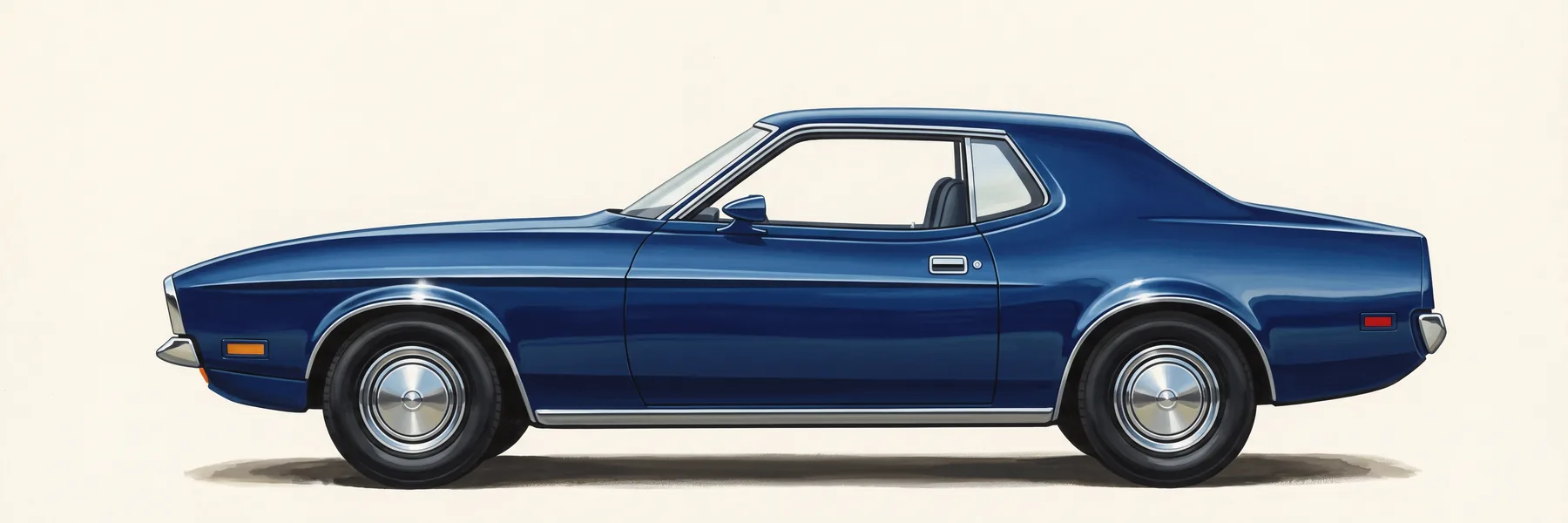
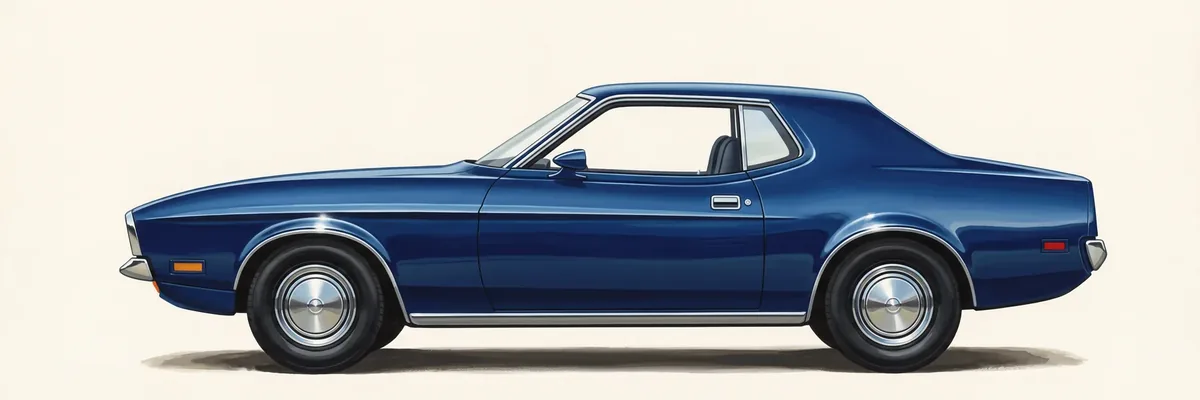
The 1972 from the side.The 1971, for comparison
Script on the tail
Walk round the back of a car that is not a Mach 1. The 1971 has block MUSTANG letters across the rear; the 1972 has a small chrome Mustang script on the right-hand side.11213
No more Boss
There is no Boss 351 model for 1972, so a Boss 351 in this body is a 1971. The 429 is gone too, which leaves the 351 as the largest engine.1312
The Sprint edition
A Sprint edition for the 1972 Olympics arrived mid-year, with USA decals on the rear quarter panels.312
17 factory colors. 15 of the 17 color names are confirmed by a second source214; the swatches are approximate screen colors, not paint matches.
Bright Red2B
Maroon2J
Light Blue3B
Grabber Blue3F
Bright Blue3J
Bright Green Glow4B
Ivy Glow4C
Bright Lime4E
Medium Lime4F
Medium Green4P
Dark Green4Q
Light Pewter5A
Medium Ginger5H
Medium Yellow Gold6C
Medium Bright Yellow6E
Gold Glow6F
Wimbledon WhiteM
CJ Pony Parts lists 17 colors. The number of cars per color is left out: those are Marti Auto Works' figures, which may only be quoted one at a time. Maine Mustang lists 15 of the same names; Bright Green Glow and Medium Ginger appear only in CJ Pony Parts' list. Maine Mustang's list also has Medium Brown Metallic, which is not in CJ Pony Parts' list.
Ford built 125,093 for the 1972 model year: 75,395 hardtops, 43,297 fastbacks, 6,401 convertibles.12
How can you tell a 1972 Mustang from a 1971?
Three signs, each explained under «How to spot» on this page: script on the tail; no more Boss; the Sprint edition.131213
What engines did the 1972 Ford Mustang have?
Five engine codes, from the 250 cu in inline-six to the 351 cu in V8. The engine table on this page gives every code and rating, and the rulings cover the disputed ones.123
How much did a 1972 Ford Mustang cost new?
Base retail prices, before options: hardtop $2,679; Grandé $2,865; fastback $2,736; Mach 1 $3,003; convertible $2,965.2one source
What colors did the 1972 Ford Mustang come in?
CJ Pony Parts lists 17 factory colors.14one source
Where is the VIN on a 1972 Ford Mustang?
On the top edge of the dash, driver's side, visible through the windshield.5one source