A 1969 VIN has 13 characters. Type one in, and the decoder reads it against the code tables on this page.
113699W3000252one source · GM's own example from the 1969 kit: the 25th car built at Willow Run, here a six-cylinder sedan (model 11369); the unit number counts every series together.
The code table
Position
Meaning
111 · 113 · 114
Series: 111 4-cylinder · 113 6-cylinder · 114 V8
27 · 69
Body: 27 2-door coupe · 69 4-door sedan
9
Model year (1969)
W
Assembly plant: Willow Run (GM shows «only basic designations»)
300001 →
Unit number, counted at each plant for all series together
Where to find it: Stamped on a plate attached to the top left of the instrument panel.2one source
Every conflict we found for 1969, and how we settled it. All rulings.
Open
1969 Nova production
Our ruling: Unresolved. Nova Resource's rows add up to 251,849; the reprinted book chapter gives 268,011 without a breakdown. Neither says what it includes. Wikipedia's table gives 251,900, which looks like Nova Resource's figure rounded and is not counted separately.
What each source says (2)
182,379 coupes and 69,470 sedans, 251,849 in all1one source
Our ruling: Unresolved, leaning to 17,564. The reprinted book chapter says 17,564 and Old Cars 17,654; the two differ by two swapped digits and may come from the same list. Nova Resource's 17,564 is the chapter's and is not counted separately; its engine rows (L48, L34, L78) add up to 17,565 (our sum).
Our ruling: Two engines. GM's own 1969 kit lists the 2-barrel L65 at 250 hp and the 4-barrel LM1 at 255 hp, and Nova Resource counts them separately; Wikipedia's 255-hp two-barrel mixes the two. Both are in the engine table.
What each source says (4)
L65, 250 hp, 2-barrel, in the power-team chart and the price schedule2one source
LM1, 255 hp, Four Barrel, on the engine data page of September 19682one source
2,207 with the 255-hp 350 (LM1) and 5,922 with the 250-hp 350 (L65)1one source
1969 was a strong sales year for the Nova. The reprinted book chapter says calendar sales rose more than forty percent; its model-year total of 268,011 and Nova Resource's 251,849 both stand well above the 183,552 Nova Resource counts for 1968. The growth was in the coupe, up from 105,680 to 182,379 in Nova Resource's rows, while the four-door sedan slipped from 77,872 to 69,470. V8 Novas rose from 48,624 to 88,393. For the first time a Nova could have Turbo Hydra-Matic; Nova Resource, whose gearbox counts include Canada's Acadian, has 27,704 with the TH350 and 1,411 with the TH400. The SS 350 got a stronger block with four-bolt main bearing caps, and factory AM-FM radio was offered for the first time.13
For 1969 the Chevy II name was gone: GM's color chart and price list say Nova, its engine pages Chevy Nova, and Wikipedia calls the 1969 the Chevrolet Chevy Nova.25
Simulated vents were added below the Nova script, which moved to the front fender behind the wheel opening, and the steering column now locked.5one source
The SS, for the V8 coupe only, now included the 300-hp 350 and power front disc brakes.2one source
The story of the year
SS sales roughly tripled
The reprinted book chapter counts 17,564 Super Sports, «a three hundred percent increase» over 1968 by its words, about three times 1968's 5,571 (our calculation); Old Cars gives 17,654, so the count is an open ruling.34one source
The 375-hp 396 went into 5,262 of them, 311 with L89 aluminum heads, and the 350-hp 396 into 1,947.3one source
How to spot a 1969
What tells it apart from a 1968.
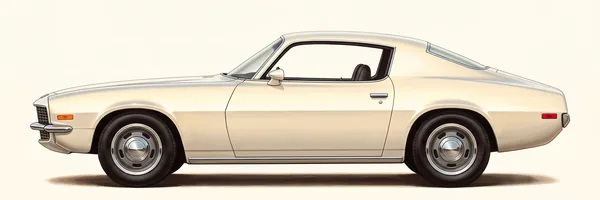
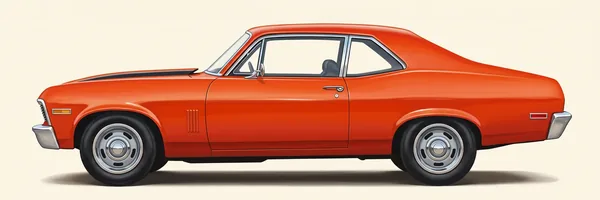
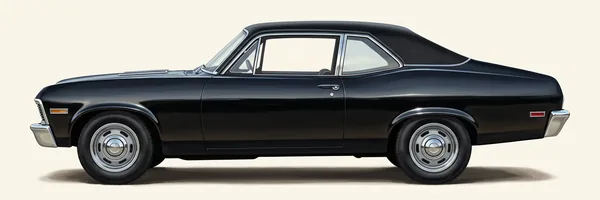
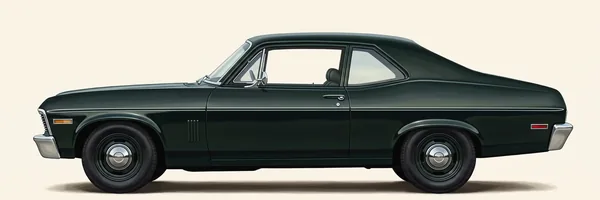
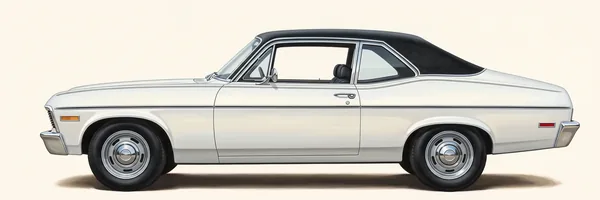
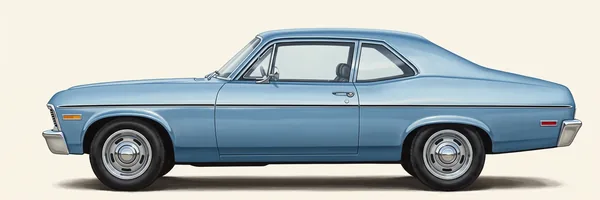
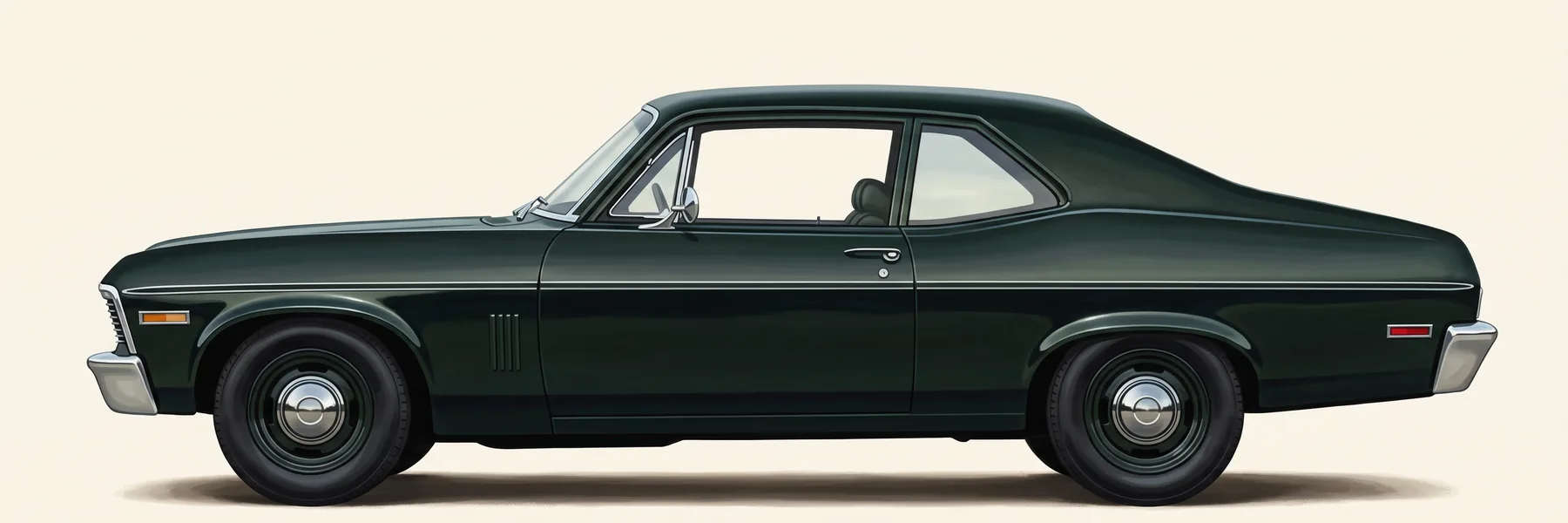
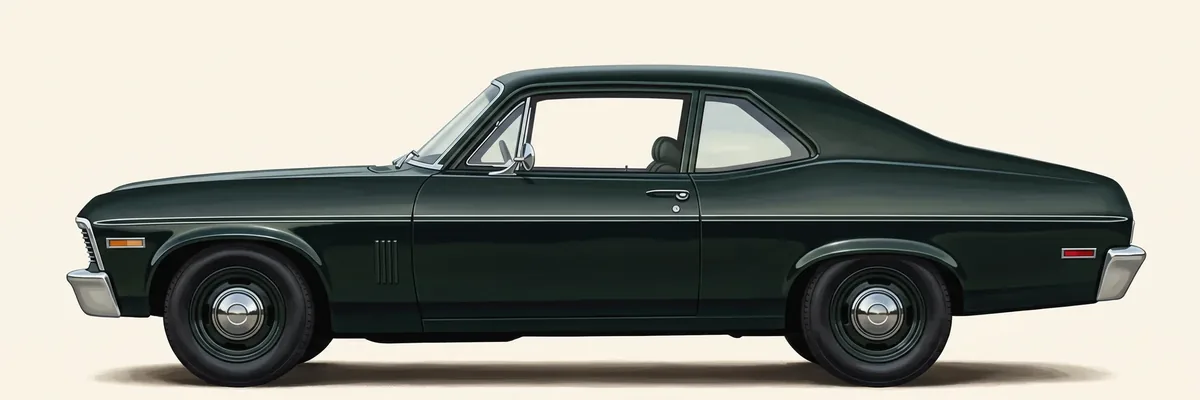
The 1969 from the side.The 1968, for comparison
Nova, not Chevy II
The Chevy II name is gone from the car.5one source
Script and vents on the front fender
The Nova script sits on the front fender, behind the wheel opening, above simulated vents (Wikipedia; GM's SS has «simulated front fender louvers»).25
Disc brakes on the SS
The SS has power front disc brakes as standard.2one source
Nova Resource's rows; one source. The reprinted book chapter gives a model-year total of 268,011; see the ruling. Nova Resource marks the rows behind these totals as including Canada's Acadian; whether the totals do is not clear.
Gross ratings and codes from GM's 1969 power-team chart and its engine data page of September 1968. The 2-barrel L65 (250 hp) and the 4-barrel LM1 (255 hp) are two different 350s; Wikipedia's 255-hp two-barrel 350 mixes them up. The SS 350 is the L48; Z26 is the SS option. The 375-hp 396 is from the same chart read with OCR; 311 of them had the L89 aluminum heads, by the reprinted book chapter.
16 factory colors. The color names come from one source2one source; the swatches are approximate screen colors, not paint matches.
Tuxedo Black10
Dover White50
Glacier Blue53
Dusk Blue51
Le Mans Blue71
Olympic Gold65
Burnished Brown61
Azure Turquoise55
Frost Green59
Burgundy67
Cortez Silver69
Garnet Red52
Champagne63
Fathom Green57
Butternut Yellow40
Rallye Green79
GM's list of solid exterior colors with paint codes for the 1969 Nova; the two-tones are left out. No source we have gives the number of cars per color, so the counts are empty. Champagne is marked «Check availablity before ordering».
251,849 by the count we use: 182,379 2-door coupes, 69,470 4-door sedans. The sources disagree on the total; the ruling on this page explains which figure we show and why.13sources disagree
How can you tell a 1969 Nova from a 1968?
Three signs, each explained under «How to spot» on this page: nova, not Chevy II; script and vents on the front fender; disc brakes on the SS.25
What engines did the 1969 Chevrolet Nova have?
Nine engines, from the 153 cu in four to the 396 cu in V8 (Nova SS). The engine table on this page gives every code and rating, and the rulings cover the disputed ones.23
How much did a 1969 Chevrolet Nova cost new?
Base retail prices, before options: Coupe, four $2,237; Sedan, four $2,267; Coupe, six $2,315; Sedan, six $2,345; Coupe, V8 $2,405; Sedan, V8 $2,434; Nova SS (V8 coupe only) +$280.20 (open ruling).2one source
What colors did the 1969 Chevrolet Nova come in?
General Motors (GM Heritage Archive) lists 16 factory colors.2one source
Where is the VIN on a 1969 Chevrolet Nova?
Stamped on a plate attached to the top left of the instrument panel.2one source