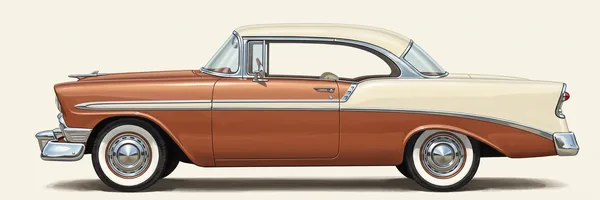
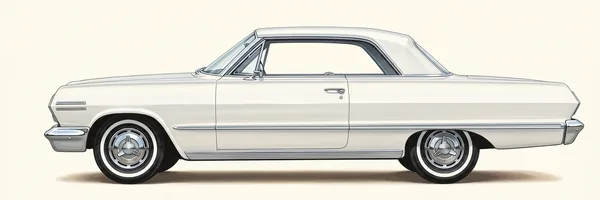
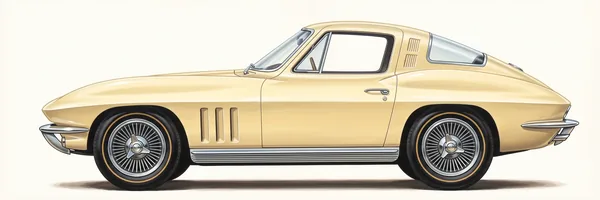
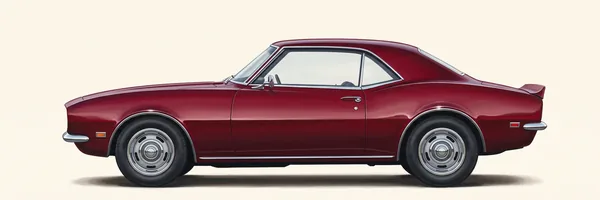
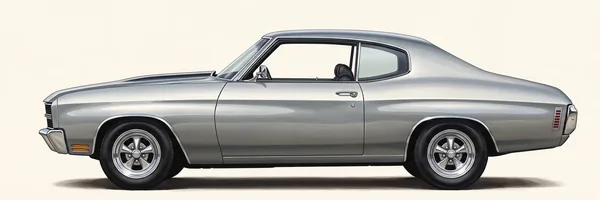
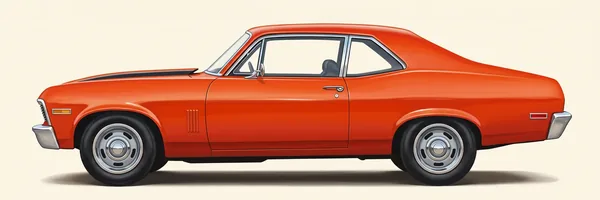
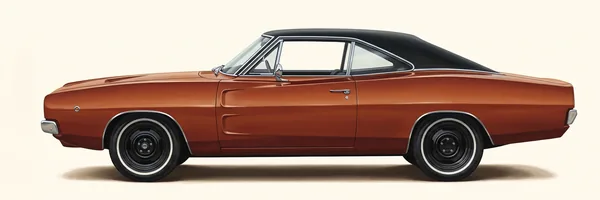
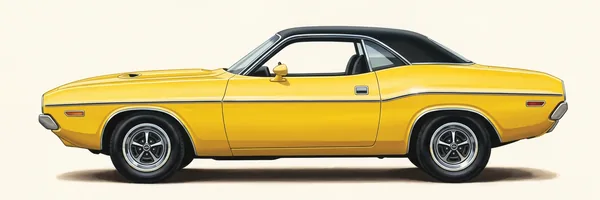
Chevrolet Bel Air
11 rulings, 7 still open.
Open
1955 Bel Air production
- 764,852 Bel Airs, with the 8,386 Nomads on a page of their own1one source
- 770,955, in six rows that add up, among them 6,103 Nomads2one source
- 800,968 in six rows (our sum), higher than Over-Drive's in every row; the article calls its figures estimates3one source
Our ruling: Unresolved. We show Over-Drive's five non-Nomad rows and Consumer Guide's Nomad count, 773,238 in all (our sum). By our arithmetic Over-Drive's five other rows add to exactly Consumer Guide's 764,852, so Consumer Guide's Bel Air total leaves the Nomad out. Over-Drive's 6,103 Nomads is the same figure it and Consumer Guide give for 1957 and looks carried over by mistake. Classic Industries names no source and says its figures are not verified by the factory; no source explains why they are higher.
Open
How many two-tone combinations in 1955
Our ruling: Unresolved. We show the sixteen combinations on GM's own sheet. Wikipedia's nineteen has no citation; the gap could be combinations dropped or added during the year, but no source we have says so.
Open
How many Nomads were built
- 8,386 in 1955, 7,886 in 1956 and 6,103 in 19571one source
- 6,103 in 1955, 7,886 in 1956 and 6,103 in 195726one source
- 8,530 in 1955, 8,103 in 1956 and 6,264 in 19573one source
Our ruling: Unresolved for 1955. We show Consumer Guide's figures. Over-Drive agrees for 1956 and 1957, but its 1955 figure is the same 6,103 as its 1957 one, which looks like a copying slip. Classic Industries is higher in all three years and calls its figures estimates.
Settled
Was the V8 standard on the 1955 Nomad?
- Yes: the Nomad got the 265 V8 as standard7one source
- No: a six-cylinder Nomad is listed at $2,472 and 3,300 lb2one source
- The six is among the Nomad's 1955 engines, and $2,571 is the price «with V-8»8one source
Our ruling: Settled: the six was available. Over-Drive's table prices a six-cylinder Nomad, and Consumer Guide lists the six among the Nomad's engines and gives its $2,571 as the V8 price. Wikipedia's statement carries no citation.
Open
The 1956 Pikes Peak car
- A disguised four-door sedan, driven by Zora Arkus-Duntov in September 19551one source
- A four-door hardtop, prepared by Arkus-Duntov9one source
Our ruling: Unresolved. Over-Drive's sentence is Wikipedia's, so it does not count as a third source.
Open
1956 Bel Air production
- 669,064, naming 103,000 Sport Sedans, 128,000 Sport Coupes and 7,886 Nomads110one source
- 669,053, in seven rows that add up2one source
- 692,530 in seven rows (our sum), higher than Over-Drive's in every row3one source
Our ruling: Unresolved. We show Over-Drive's rows, the only set that adds up to its own total. Consumer Guide's total is eleven higher, and every figure it names agrees with Over-Drive's rows, so the eleven cannot be placed. Wikipedia's 1956 figures are Consumer Guide's, word for word. Classic Industries names no source.
Open
What fuel injection cost in 1957
Our ruling: Unresolved. Over-Drive's two prices suggest the figure depends on the version: Consumer Guide's $484 matches Over-Drive's 250-hp engine. Hagerty's $538 and Wikipedia's $500 are both for the 283-hp engine, so that version has three prices: $500, $538 and Over-Drive's $675. Over-Drive lists the engines as options and notes that the two-barrel 283 is included in V8 model pricing; no other source says what its price is added to.
Settled
How much longer and lower was the 1957
- 2.5 inches longer and 1.5 inches lower1one source
- 197.5 and 200.00 inches long for the sedans, hardtops and convertible, 200.8 and 200.00 for the wagons; 60.5 and 59.93 inches high, loaded (sedans)1415one source
Our ruling: Settled by GM's sheets: the sedans, hardtops and convertible became 2.5 inches longer, as Consumer Guide says, but the wagons, the Nomad among them, 0.8 inch shorter; and the cars were only 0.57 to 0.68 inch lower, loaded, depending on the body, not 1.5 (our arithmetic).
Settled
How many versions of the 1957 283 V8
- Six: 185, 220, 245, 270, 250 (fuel injection) and 283 hp (fuel injection)1115
- Five: 185, 245 and 270 hp with carburetors, 250 and 283 with fuel injection8one source
- The 270-hp engine was a four-barrel16one source
- Four 283s: 185 and 220 hp among its four standard engine options (with the six and the 265), plus 270 and 283 hp17one source
Our ruling: Settled by GM's own 1957 table: six versions, and the 270-hp engine had two four-barrel carburetors and the competition camshaft. Consumer Guide's main article also says half a dozen, and its 1957 convertible profile six.
Open
1957 Bel Air production
- 702,220, naming 166,426 Sport Coupes, 47,562 convertibles and 6,103 Nomads12
- 720,356 in seven rows (our sum), higher than Over-Drive's in every row3one source
Our ruling: Unresolved. Consumer Guide and Over-Drive agree on the total and on every row Consumer Guide names, so we count them as one source, not two. Classic Industries' rows are 0.3 to 4 percent higher (our arithmetic), it names no source and calls its figures estimates, and no source explains the gap.
Settled
Where the 1957 unit numbers start
- 100001 and up at each plant15one source
- An example numbered 001023, on a later identification page in the same PDF15one source
Our ruling: Settled by GM's own 1957 sheet: unit numbers start at 100001. The later page is not part of GM's 1957 specifications, and its example number, 001023, is below that starting point.
Chevrolet Corvette
8 rulings, 6 still open.
Open
1963 coupes: 10,594 or 10,954
Our ruling: Unresolved, leaning to 10,594, the Black Book's count; with its 10,919 convertibles it makes the 21,513 total (our sum). Wikipedia and Consumer Guide repeat the Black Book, so it has no independent second source. Over-Drive's 10,954 looks like two digits swapped.
Open
The 1963 sport coupe's base price
Our ruling: Unresolved, leaning to $4,252. Chevrolet's own price schedule of 14 June 1963 gives the sport coupe at $4,252.00, and Consumer Guide's table has the same; the Black Book gives $4,257. No source we have explains the $5 (our arithmetic); that $4,257 was an earlier price is a guess.
Settled
The 1963 fuel-injected 327: 360 or 375 hp
- 360 hp (RPO L84)3132
- 375 hp in its option list, 360 hp in its engine table29one source
Our ruling: 360 hp. GM's own option list, price schedule of June 1963 and engine page give 360, and so do Consumer Guide's table and text. The Black Book prints 375 in its option list, but its own engine table says 360; 375 is the 1964 rating.
Open
1964 convertibles: 13,925 or 14,925
- 13,925 convertibles, 22,229 in all33one source
- 14,925 in one place, «rising to 13,925» in another, and 22,229 in all34one source
Our ruling: Unresolved, leaning to 13,925, the Black Book's count; Wikipedia and Consumer Guide repeat it, so it has no independent second source. Over-Drive gives both 14,925 and 13,925, and its 22,229 total is 8,304 coupes plus 13,925 (our sum), so its 14,925 looks like a misprint.
Open
The 1965 base prices
- $4,321 for the sport coupe and $4,106 for the convertible35one source
- $4,233 and $4,022 (manufacturer's suggested retail price)36one source
Our ruling: Unresolved. The Black Book gives $4,321 and $4,106 (Consumer Guide's table and Wikipedia repeat them, so they are one source); the price schedule in GM's own 1965 kit gives $4,233 and $4,022, $88 and $84 less (our arithmetic). No source we have explains the difference.
Open
1965 production: 23,562 or 23,564
- 23,562 built (8,186 coupes, 15,376 convertibles), but the last VIN ended in 123564; «It isn't certain if the total is wrong, or if two VINs weren't used»35one source
- 15,378 convertibles in its table, so its rows add up to 23,564 (our sum); 23,562 in its text37one source
Our ruling: Unresolved. We show 23,562, the Black Book's published build figure, which Wikipedia and Consumer Guide's text repeat. The Black Book's own month table ends at 123564, and Consumer Guide's table rows add up to 23,564 (our sum). The Black Book itself says it is not certain whether the total is wrong or two numbers were not used, and every figure here comes from the same track.
Settled
The 1966 L72: 425 or 450 hp
- 425 hp3839
- first listed at 450 hp, cut to 425 hp shortly after introduction40one source
Our ruling: 425 hp, GM's own rating on its power-team page and price schedule, and Consumer Guide's. The Black Book says the engine was listed at 450 hp at first and the rating, not the output, was cut to 425 soon after; its option list prints «450/425hp».
Open
The 1967 L88 option price
- $947.90 for RPO L884142
- «an additional $1,500 over the base $4,240.75 price – the L88 engine and required options»43one source
- «This option was an additional $1,500» in its text; «$1500.00 plus other mandatory options» in its option list44one source
Our ruling: Unresolved. The Black Book and Consumer Guide's table list RPO L88 at $947.90. Wikipedia and Over-Drive's text give $1,500, which Wikipedia ties to «the L88 engine and required options», while Over-Drive's own option list says $1,500 «plus other mandatory options», so Over-Drive does not agree with itself on what the $1,500 covered. All agree on 20 cars and 430 hp.
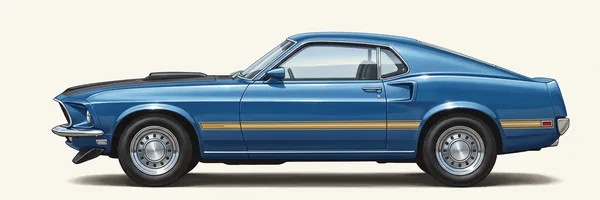
Ford Mustang
46 rulings, 18 still open.
Settled
A 1964½ fastback price
- 1964½ retail prices include «Fastback, standard $2,533»45one source
- The 1964½ production list has only coupes and convertibles45one source
- In 1964 the Mustang came as a hardtop or a convertible; the fastback was new for 19654647
Our ruling: There was no 1964½ fastback, so we leave the price out. $2,533 is the 1965 fastback price.
Open
The 1964½ engine list
- Three engines: U 170 six 101 hp, F 260 V8 164 hp, D 289 V8 210 hp45one source
- U 170 six 101 hp; F 260 V8 164 hp; D 289 4-barrel 210 hp; K 289 HiPo 271 hp, 1964–196748one source
- 170 six 105 hp (1964); 260 V8 164 hp (1964); 289 4-barrel 210 hp (1964); 289 HiPo 271 hp (1964–1966)47one source
Our ruling: We add the K-code 289 HiPo, which two sources list for 1964 and Maine Mustang leaves out. The 170 six is 101 hp in two sources and 105 hp in Wikipedia; we show 101 and keep that point open.
Open
The 1964½ hardtop's base price
- Coupe, standard $2,32045one source
- The low-end hardtop with the U-code six and a three-speed manual retailed for $2,36847one source
Our ruling: Unresolved. $2,320 is also Maine Mustang's 1965 hardtop price, so the two may describe different points in the year. We show $2,320 and keep this open.
Open
What the 559,451 total counts
- A separate 1964½ table of 121,538 cars, built from March to 17 August 1964, next to the 1965 table of 559,4514549one source
- Separate 1964.5 and 1965 tables; the 1965 rows add to 559,45146one source
- «A total of 559,451 Mustangs were produced for the 1965 model year»50one source
- Table labelled «calendar years», flagged as unclear whether 1964½ cars are included51one source
Our ruling: Unresolved. Maine Mustang and CJ Pony Parts list the 121,538 cars of 1964½ apart from the 559,451; if that is right, the whole 1965 model year comes to 680,989. MustangSpecs calls 559,451 the total for the 1965 model year. We show the two apart until a factory source settles it.
Settled
1965 hardtop production
Our ruling: We use 409,260. Maine Mustang and CJ Pony Parts give it (Wikipedia's table copies Maine Mustang), and only that figure makes hardtops, convertibles (73,112) and fastbacks (77,079) add up to the 559,451 total that every source agrees on. MustangSpecs' figure is exactly 1,000 higher.
Settled
1965 Shelby GT350 production
- Total 562: 1 street prototype, 504 street cars, 2 competition prototypes, 34 R-models, 4 drag cars, 17 other prototypes52one source
- «Total 1965 model year production was 562 units»53one source
- Shelby GT350 525, Shelby GT350R 3746one source
- GT350R: «Production Numbers 36»54one source
Our ruling: 562 in all, which MustangSpecs and Wikipedia print and CJ Pony Parts' two rows add up to. How the 562 split between street cars and R-models is not settled: 37 R-models in CJ Pony Parts, 34 in MustangSpecs' breakdown and 36 on its GT350R page. We give only the total.
Settled
MustangSpecs' 1966 shares
- «almost 5% being fastbacks»55one source
- «The fastback and convertibles with luxury interior were also popular, each making up just over 9% of total sales»55one source
Our ruling: 35,698 fastbacks are 5.9 percent of 607,568. The 7,889 luxury fastbacks are 1.3 percent and the 12,520 luxury convertibles 2.1 percent. We recompute every share from the figures.
Settled
1966 Shelby GT350 production
- GT350 1,365, GT350 Hertz 1,000, prototypes 13, total 2,37856one source
- «Total production for 1966 was 2,378 units, including two prototypes and four drag cars»; Hertz bought 1,003 fastbacks including two prototypes53one source
- GT350 1,438, GT350-H 936, GT350 convertible 6 (together 2,380)46one source
- GT350-H: «Production Numbers 1002»57one source
Our ruling: We use 2,378, which MustangSpecs and Wikipedia give; CJ Pony Parts' rows add up to 2,380. The number of Hertz cars is not settled (936, 1,000, 1,002 or 1,003), so we give only the total.
Settled
Power of the 1967 390 (S-code)
Our ruling: 320 hp, which Maine Mustang and Wikipedia's engine table give independently. Wikipedia's own text says 335 hp.
Open
1967 Shelby GT350 production
Our ruling: Unresolved: 1,174 or 1,175, one source each.
Settled
1967 Shelby GT500 production
Our ruling: We use 2,050, which CJ Pony Parts and MustangSpecs give. Wikipedia's 2,048 carries no citation.
Open
How the 1968 convertibles split
Our ruling: Both add up to the 25,376 convertibles that MustangSpecs confirms, so the total is settled and the split is not. We show Maine Mustang's split until a third source settles it.
Settled
CJ Pony Parts' 1968 fastback figure
Our ruling: We use 33,585. CJ Pony Parts' rows add to 319,404, exactly 2,000 more than the 317,404 total every source agrees on.
Settled
Engine code F
Our ruling: F is the 302 with a 2-barrel carburetor, rated at 210 hp in 1968. Maine Mustang's own 1968 list gives the 302 four-barrel twice, at 210 and 230 hp, so one entry is wrong, and its 1969 list calls F the 302 two-barrel. CJ Pony Parts gives F as the 2-barrel too, and so does Wikipedia's table, which cites it.
Settled
How much production fell in 1968
Our ruling: 472,121 to 317,404 is a fall of 32.8 percent, not 22. We use the figures and recompute the percentage.
Open
Power of the 1968 Shelby GT500 before the Cobra Jet
Our ruling: Unresolved: 335, 355 or 360 hp. MustangSpecs gives 335 in its text and 355 in a spec table that looks copied from its 1967 page; Wikipedia gives 360. No second source settles it.
Settled
1968 Shelby GT500KR production
- GT500KR fastback 933, convertible 3184666
- A 2008 run of 1,571 cars «matches that of the original 1968 GT500KR»53one source
Our ruling: We use 933 fastbacks and 318 convertibles, 1,251 in all, which CJ Pony Parts and MustangSpecs both give. Wikipedia's 1,571 appears only in passing, in its section on the 2008 car.
Open
Power of the 200 six (T-code) in 1968
- 200 cu in six, 1-barrel, 120 hp62one source
- 200 six: 120 hp in 1967, 115 hp in 196859one source
- «For the engines manufactured between 1968-1969, the horsepower inexplicably dropped to 115 hp»48one source
Our ruling: Unresolved: 115 or 120 hp. Wikipedia's table and CJ Pony Parts both say 115, but the table cites CJ Pony Parts, so they count as one source against Maine Mustang's 120. Maine Mustang's own 1969 list has 115.
Open
The W-code 427
Our ruling: We keep the code, because it appears in the 1968 listings, but mark it as never confirmed in a built car.
Open
The X-code 390 two-barrel
- Not in the 1968 engine list62one source
- X = 390 cu in 2-barrel, 270 hp, 196859one source
- X = 390 cu in 2-barrel, 280 hp, 1968; 733 cars: 477 hardtops, 189 fastbacks, 67 convertibles48one source
Our ruling: CJ Pony Parts lists the X-code, and so does Wikipedia's table, which cites CJ Pony Parts among other sources. Maine Mustang leaves it out. We include it; its rating, 270 or 280 hp, stays open.
Open
How many Boss 429s were built for 1969
- Boss 429: 869, and «Total (Includes two Boss Cougars) 299,824»64one source
- «Boss 429 859», with a separate line «also includes two Boss Cougars 2»67one source
- «In 1969, Ford produced 859 Boss 429s. Also, two Boss 429 Cougars were produced»; 1,359 for both years68one source
- «Its list price of $4,868 limited deliveries to 859»69one source
- «only 857 Boss 429s were sold in 1969»70one source
- «The first Boss 429 was numbered KK NASCAR 1201 while the last 1969 is numbered 2059»71one source
Our ruling: Unresolved: 857 or 859. Wikipedia, Over-Drive and Car Memories give 859. MustangSpecs prints 857, although its own 1970 page puts the 1969 cars at KK 1201 to 2059, which is 859 numbers by our count. Car Memories adds a line about two Boss Cougars without saying whether they are inside the 859. Maine Mustang's 869 matches no other source, and Wikipedia's 1,359 for both years is one more than 859 + 499.
Settled
CJ Pony Parts' 1969 convertibles
Our ruling: We use 11,307 and 3,439. CJ Pony Parts' figures are the 1968 convertible figures, and with them 1969 would add up to 310,454, not the 299,824 that Maine Mustang and MustangSpecs give.
Open
The 302 two-barrel (F-code) in 1969–70
- F = 302 2-barrel, 220 hp, in both 1969 and 19706472one source
- Text: 1969 brought «a revised» 302 with 220 hp; engine table: 302 2-barrel, 210 hp, 1969–197047one source
- F = 302 2-barrel, 210 hp, one rating for 1968–197348one source
Our ruling: Unresolved: 210 or 220 hp. Maine Mustang and Wikipedia's text say 220, Wikipedia's table says 210, and CJ Pony Parts gives one rating for six model years. We show both.
Settled
How many 1969 Mustangs had the GT Equipment Group
Our ruling: We use 5,396, which Car Memories and MustangSpecs' GT page give; Wikipedia's 5,396 cites Car Memories. MustangSpecs' Mach 1 page says 5,958, which is exactly the 1969 deluxe SportsRoof figure in the production tables.
Settled
1969–70 length and width
- Length 187.5 inches, width 71.7 inches (the article's infobox)47one source
- Overall length grew to 187.4 inches, up 3.8 inches; width 71.3 inches75one source
- 1969: length 187.4 inches, width 71.3 inches (1968: 183.6 and 70.9)76one source
- Overall length: 187.4 inches, for both 1969 and 19706977one source
Our ruling: We use 187.4 inches and 71.3 inches. HowStuffWorks, CJ Pony Parts and Over-Drive's fact sheets give the length, and HowStuffWorks and CJ Pony Parts the width; only Wikipedia's infobox has 187.5 and 71.7. Height depends on the body: Over-Drive gives 51.2 inches for the 1969 coupe and convertible and 50.3 for the fastback.
Settled
Two errors in Maine Mustang's 1969 engine list
Our ruling: We use a 2-barrel for the H-code and 375 hp for the Boss 429. Wikipedia's 1969–70 table does not cite CJ Pony Parts, so the two agree independently. Maine Mustang's own 1970 list has 375 hp too.
Settled
How many Boss 302s were built for 1970
Our ruling: We use 7,013, which Maine Mustang and MustangSpecs give independently and which makes Maine Mustang's 198,239 total add up. Wikipedia's 7,013 cites MustangSpecs. Over-Drive's 6,318 stands alone.
Settled
How much production fell in 1970
- «Total production was down 5.5% year on year» and «down from 299,824, a drop of 36.39% versus 1969»79one source
Our ruling: 33.9 percent: 198,239 against 299,824, with the Boss cars counted in both years. The 36.39 compares 1970 without the Boss cars against 1969 with them, and 5.5 is MustangSpecs' figure for 1969.
Settled
An error in Maine Mustang's 1970 engine list
Our ruling: We use a 2-barrel for the H-code, as Wikipedia's table and CJ Pony Parts do independently.
Open
Shelby Mustangs sold as 1970 models
- 1970: GT350 fastback 315, GT500 fastback 28646one source
- «All 1969–1970 Shelby Mustangs were produced in 1969. Because of dwindling sales, the 789 remaining 1969 cars were given new serial numbers and titled as 1970 models.»47one source
Our ruling: Unresolved. Wikipedia says the 1970 cars were 1969 cars with new serial numbers, 789 of them. CJ Pony Parts lists 601 (315 + 286) under 1970 production. We do not state a 1970 Shelby count.
Settled
1970 total production
Our ruling: 198,239 with the Boss 302 and Boss 429, 190,727 without them; the difference is exactly the 7,512 Boss cars. Wikipedia's 191,239 matches neither.
Open
Boss 302 and Boss 429 prices in the 1971 price list
- 1971 prices include a Boss 302 at $3,268 and a Boss 429 at $4,12481one source
- Boss 302 and Boss 429 engines are listed for 1969–70 only, not for 1971–7347one source
- The same two prices, labelled «Fastback, Mach 1, standard: $3,268» and «Special, Boss 351: $4,124»82one source
Our ruling: Maine Mustang's labels cannot be right: neither car was built for 1971. shnack.com gives the same two prices to the Mach 1 and the Boss 351, which fits the 1971 line-up, but its tables copy Maine Mustang's, so it is not a second source. We leave the prices out until an independent source settles them.
Settled
How much production fell in 1971
Our ruling: 149,678 against 190,727 is a fall of 21.5 percent, both counted without the Boss models. Counting them in both years, 151,484 against 198,239, it is 23.6 percent. Not 36.
Settled
1971 Mach 1 production
Our ruling: We use 36,499, which Maine Mustang and CJ Pony Parts give alike. Over-Drive's 36,449 stands alone.
Open
The 1971 Q-code 351 Cobra Jet
- Q = 351 4-barrel Cobra Jet, 280 hp81one source
- Q = 351 Cleveland CJ, 285 hp, late in the 1971 model year only, replacing the M-code47one source
- Q = 428 Cobra Jet for 1969–197148one source
Our ruling: Unresolved: 280 or 285 hp. CJ Pony Parts' entry describes the earlier 428, so it does not settle the 1971 engine.
Open
Which plants built the 1971–73 Mustang
Our ruling: Unresolved. We list the plant codes Maine Mustang gives for each year and flag the others as disputed.
Settled
1971 total production
Our ruling: The difference is exactly the 1,806 Boss 351s. We show 151,484 including the Boss 351, and 149,678 without it.
Settled
The Mach 1 body code on the door tag
- Production tables: Mach 1 «63C» for 1969 and 1970, «63R» for 1971, 1972 and 1973, body code 0546one source
- 1971: «"05" VIN code & "63R" body code on the door tag»88one source
- «All first generation Mach 1's are distinguished by the body style code 63C on the door data plate»74one source
Our ruling: 63C on the 1969–70 cars and 63R from 1971. MustangSpecs' «all first generation» holds only for 1969–70; CJ Pony Parts' tables and Wikipedia both give 63R for 1971.
Settled
How much production fell in 1972
- «Total production was down 15.88% year on year … from 149,678 units in 1971»89one source
Our ruling: MustangSpecs computed the fall from its own 125,903. With 125,093 it is 16.4 percent against 149,678, or 17.4 percent against 151,484 with the Boss 351.
Open
1972 net ratings for the 250 six and the 302
- L = 250 six, 98 hp; F = 302 2-barrel, 140 hp8587one source
- L = 250 six, 95 hp net; F = 302 2-barrel, 140 hp47one source
- 250 six: «Horsepower: 99 @ 3600 RPM SAE Net»; 302: «Horsepower: 141 @ 4000 RPM SAE Net»90one source
Our ruling: Unresolved: 95, 98 or 99 hp for the six, and 140 or 141 hp for the 302. Over-Drive's two figures are the ones Maine Mustang gives for 1973.
Open
How many 1972 Sprint fastbacks
- «Ford made 800 Sprint fastbacks, and 50 convertibles»87one source
- Sprint production table on the same page: 3,086 SportsRoofs, 6,247 coupes, 50 convertibles, 9,383 in all87one source
Our ruling: The same page gives two figures for the fastbacks, and we have no second source. We do not state a Sprint count.
Settled
1972 production
- 6,121 convertibles and 16,622 fastbacks; total 125,8138587one source
- 125,813 (US sales)80one source
- 125,903 in total; 6,401 convertibles; «Grande versions (28k units)»; «The Fastback as base and Mach 1 sold about 33k units»89one source
- 15,622 SportsRoofs and 6,401 convertibles; the rows add to 125,09346one source
- 15,622 SportsRoofs, 6,401 convertibles and 18,357 Grandés; no total90one source
Our ruling: We use 125,093, the sum of rows that each have at least two independent sources: 6,401 convertibles and 15,622 fastbacks (CJ Pony Parts and Over-Drive), 18,045 Grandés (Maine Mustang and CJ Pony Parts) and the hardtop and Mach 1 figures, which Maine Mustang, CJ Pony Parts and Over-Drive all give. 6,121 is exactly the 1971 convertible figure, and 16,622 is 1,000 too high, the same slip as the 1965 hardtop figure. 125,093 is also MustangSpecs' 125,903 with two digits swapped. MustangSpecs' rounded 28k Grandés and 33k fastbacks fit none of the lists.
Open
1973 net ratings for the 250 six and the 302
Our ruling: Unresolved: one source each. We show both figures.
Settled
Over-Drive's 1973 ratings for the 351s
- 351 2-barrel 177 hp (H); 351 4-barrel Cobra Jet 266 hp (Q)86one source
- Engine table: H-code 177 hp; Q-code 266 hp, for 197388one source
- Engine tabs: «173 HP 351 CID V-8» and «259 HP 351 CID CJ V-8»91one source
Our ruling: We use 177 and 266 hp, which Maine Mustang and Wikipedia's Mach 1 table give independently. Over-Drive's 173 and 259 stand alone.
Settled
1973 Mach 1 and Grandé production
- Mach 1: 35,440; Grandé: 25,274468692
- Mach 1 «quite popular with 35,490 sold»; Grandé 27,27491one source
Our ruling: We use 35,440 Mach 1s and 25,274 Grandés, which Maine Mustang, CJ Pony Parts and MustangSpecs give alike. Over-Drive's figures stand alone.
Settled
1973 total production
Our ruling: 134,867, which three sources give. Wikipedia's figure is 50 lower.
Dodge Charger
20 rulings, 11 still open.
Settled
Was there a 273 V8 in the 1966 Charger?
- «Engine choices were V-8s only – from the 273 CID to the 426 CID Street Hemi»94one source
- The 318 was the standard engine959697
Our ruling: No. Dodge's own 1966 Charger catalog lists the 318 as standard, and Consumer Guide says the 318 came standard in the Charger, as opposed to the 273 in the Coronet. Over-Drive's line is not supported.
Settled
The width of the 1966–67 Charger
Our ruling: We use Dodge's own catalog: 75.3 inches. Wikipedia's 75.8 has no citation.
Open
The engine letters in a 1966 VIN
Our ruling: Unresolved. The two VIN guides agree that H is the Hemi but are one letter apart for the 318, 361 and 383, and neither cites a factory document. The decoder shows both readings.
Settled
1966 Charger production
Our ruling: We use 37,344. Consumer Guide and Wikipedia give it alike; Over-Drive's table rounds every Dodge figure that year to the hundred.
Open
How many 1967 Chargers had the Hemi
- «A total of 118 Chargers were built with the 426 engines in 1967, 58 with a four-speed transmission, and 59 with the automatic.»97one source
Our ruling: Unresolved: Wikipedia gives 118, but its own split adds to 117, and the figure has no citation. We give no number.
Open
The price of the Hemi on the 1967 Charger
- «in Dodge Charger ($712)»101one source
- «the Hemi cost $878»96one source
- 1968: «Hemi dual four-barrel V-8 engine in Super Bee ($712)» and «Hemi four-barrel V-8 engine in R/T ($457)»102one source
Our ruling: Unresolved: $712 or $878. Over-Drive gives $712 and Consumer Guide $878. Over-Drive's 1968 list repeats its 1967 figures with the models swapped, $712 and $457, which makes its Hemi prices doubtful, but no third source settles 1967.
Settled
When the Charger R/T began
- «The R/T package was also introduced in 1967» (in the 1967 section)97one source
- The R/T was new for 1968103104
- 1967's new R/T was the Coronet R/T101one source
Our ruling: 1968. Wikipedia's own 1968 section calls the R/T a new package, Hagerty says the 1968 Charger came as base and R/T, and Over-Drive's 1967 R/T is the Coronet R/T. The 1967 sentence most likely means the Coronet.
Settled
The size of the 1968–69 Charger
Our ruling: We use Dodge's own catalogs for both years: 208.0 × 76.6 × 53.2 inches. Wikipedia and Over-Drive give 76.7 for the width, and Over-Drive 207.0 for the 1969 length. For 1969 Over-Drive gives the height as 53.0 inches, or 53.5 with the 318.
Open
The 1968 R/T's base price
Our ruling: Unresolved: $3,480 or $3,506. We show Over-Drive's figure, because its table gives every 1968 price on the same basis.
Settled
Was there a six-cylinder 1968 Charger?
- «Some 96,100 Chargers and R/Ts were built during model year 1968, all V-8s»100one source
- A 225 slant six replaced the 318 as standard in the middle of the model year97104
- A six-cylinder row (XP-29, I-6, $3,014) in the same table100one source
Our ruling: Yes, from the middle of the model year. Wikipedia and Hagerty say so, and Over-Drive's own table has a six-cylinder row, against the «all V-8s» in its note.
Open
1968 Charger production
Our ruling: Unresolved. We show 96,100, which Over-Drive and Wikipedia give alike; Over-Drive rounds to the hundred, so the true figure may be Consumer Guide's 96,108. Consumer Guide's other article gives 92,590, and no source explains the gap.
Settled
Letters or digits for the plant in a 1968–69 VIN
Our ruling: Letters. The Plymouth Owners Club registry gives letters for 1968–69 and Hagerty calls the seventh character a letter; only one guide gives digits. The same guide gives T for Windsor in 1970, where two others give R.
Settled
Was the 440 Six Pack offered on the 1969 Charger?
- Six Pack priced for the 1969 Charger R/T ($307) and optional on the Daytona107one source
- New on the Charger for 197097108
- Hagerty: «It was only available that year» (1970), but also that the 440 «was also available right out of the gate (375 hp, 480 lb-ft of torque or 390/490 with the six-pack carbs)»104one source
Our ruling: No. Wikipedia and Consumer Guide say the Six Pack came to the Charger for 1970. Hagerty contradicts itself, calling it a 1970-only engine and also available from the start. Over-Drive's own 1969 summary names the Six Pack as a Super Bee novelty, so its 1969 Charger price is most likely a slip.
Settled
1969 Charger production
- 89,19997104
- 69,100 Chargers and 500s plus 20,100 R/Ts, rounded to the hundred (they add to 89,200)100one source
- «more than 85,000»; «only 7,000 less» than 1968's 96,108103108one source
Our ruling: We use 89,199, which Wikipedia and Hagerty give; Hagerty may have it from Wikipedia, and neither cites a source. Over-Drive's rows, rounded to the hundred, add up to 89,200, which agrees with it but can only confirm the total to within about 100. Consumer Guide's rough figures do not contradict it.
Open
The Daytona's price
Our ruling: Unresolved: $4,000 or $5,903. Neither figure is cited, and the gap is too big to be options. We give no price.
Open
When the sunroof became an option
- 1969: «A sunroof was added to the options list, but was ordered on only 260 Chargers»97one source
- 1970: «for the first time, Charger could be optioned with an electric sliding sunroof»108one source
- An electrically operated sliding sunroof in the 1970 option list111one source
Our ruling: Unresolved. Wikipedia's 1969 sunroof and its 260 cars have no citation; Consumer Guide calls the 1970 electric sunroof a first, and the 1970 catalog lists it. We do not use the 260.
Open
Was there a 1970 Daytona?
- The Daytona was discontinued for 1970, leaving the Plymouth Superbird as Chrysler's only winged car97one source
- «There were only 2 or 3 1970 Charger Daytona models built»112one source
Our ruling: Unresolved. Wikipedia says the Daytona was dropped for 1970; Over-Drive counts two or three 1970 cars, without a source or a VIN, in a passage that repeats its 1969 text. Both are single sources. We show the Daytona as a 1969 model.
Open
How many 1970 R/Ts had the Hemi
Our ruling: Unresolved. Consumer Guide's specification box says 112 Hemi R/Ts, but its text says the Six Pack had 116 orders and outsold the Hemi more than two to one, which would leave fewer than 60 Hemis. We show 112 and no Six Pack figure.
Open
The length of the 1970 Charger
Our ruling: Unresolved: 207.9 or 208.0 inches, and Hagerty's inch longer would make 209.0 against the 1969 catalog's 208.0. We do not have the 1970 catalog's dimensions.
Open
1970 Charger production
- 39,431 Chargers and Charger 500s together and 10,337 R/Ts (the two rows add to 49,768)100one source
- R/T: 10,337108one source
- 46,57697one source
- 46,315104one source
- «Charger R/T Production Total ║ 18,400» and «Total Mid-Size Production ║ 172,586» in the same table; the grand total adds up only with 18,400 (our arithmetic: with 10,337 it would be 164,523)100one source
Our ruling: Unresolved. We show Over-Drive's two rows, because Consumer Guide gives the same 10,337 R/Ts; their sum, 49,768, is our calculation, not a printed figure. But the same table prints 18,400 as the R/T production total, and its grand total of 172,586 adds up only with that figure. Wikipedia's 46,576 and Hagerty's 46,315 have no citation and differ from each other.
Chevrolet Camaro
7 rulings, 5 still open.
Settled
1967 Camaro production
- Rows adding to 220,906: 195,765 coupes and 25,141 convertibles (Chevrolet's records)113114one source
- 195,765 coupes and 25,141 convertibles115one source
- A 1967–77 production table giving 220,917 for 1967116one source
Our ruling: We use 220,906. Chevrolet's production records, as printed by the Camaro Research Group, add up to it row by row, and Over-Drive gives the same coupes and convertibles. A 1967–77 production table reprinted in GM Heritage's 1969 information kit gives 220,917; the 11 cars are not explained.
Open
1968 Camaro production
- Rows adding to 235,147 (Chevrolet's records, as printed by the Camaro Research Group)113114one source
- A reference page in GM Heritage's 1968 kit: «Production: 214,707 coupe, 20,440 convertible, 235,147 total», with option counts identical to the Camaro Research Group's117one source
- 214,711 coupes and 20,440 convertibles118one source
- A 1967–77 production table giving 235,151 for 1968116one source
Our ruling: Unresolved. We show 235,147 because the Camaro Research Group's rows add up to it. The reference page in GM Heritage's 1968 kit gives the same total, but its option counts match the Camaro Research Group's digit for digit, so it is the same chain of figures, not a second source. Over-Drive's coupes and a 1967–77 production table reprinted in GM Heritage's 1969 information kit make 235,151. No independent source settles the four cars.
Open
How many Super Sports were built in 1968 and 1969
- SS 1967 34,411; 1968 27,844; 1969 33,980, in a 1967–77 production table116one source
- 1969: RPO Z27 «Super Sport Package (1969)», 34,932; «Data shows 34,932 Camaro SS produced»113119one source
- SS 1968 27,884; 1969 34,932 (marked «citation needed»)120one source
- 34,411 with the Super Sport option in 1967115one source
Our ruling: 1967 is settled at 34,411: the table and Over-Drive give it, and the Camaro Research Group's engine counts (L48 29,270, L35 4,003, L78 1,138) add up to the same. For 1969 the SS was one option, RPO Z27: the Camaro Research Group counts 34,932, and Wikipedia has the same figure; the reprinted table gives 33,980. For 1968 the table gives 27,844 and Wikipedia 27,884. No independent source settles 1968 or 1969, so both stay open.
Open
1969 Camaro production
- Rows adding to 243,085: 225,512 coupes and 17,573 convertibles (Chevrolet's records)113114one source
- A 1967–77 production table giving 243,095 for 1969, marked «Includes 1970 carryover of 1969 design»116one source
- 214,280 coupes and 16,519 convertibles121one source
Our ruling: Unresolved. We show 243,085 because Chevrolet's records, as printed by the Camaro Research Group, add up to it row by row. A 1967–77 production table reprinted in GM Heritage's 1969 information kit gives 243,095, and Over-Drive's 214,280 coupes and 16,519 convertibles add up to neither. No second source settles it.
Open
How many 1969 Z10 pace-car coupes were built
Our ruling: Unresolved: the Camaro Research Group's option sheet gives 450 to 500, Over-Drive 200 to 300. Both are estimates; we give no figure.
Open
How many 1969 Z/28s were built
- «Z28 production for 1969 (with the Camaro model year extended into November 1969) reached 20,302 units»; the option sheet gives the same 20,302113122one source
- 19,014 in a 1967–77 production table whose 1969 row is marked «Includes 1970 carryover of 1969 design»116one source
- «19,014 sold»121one source
Our ruling: Unresolved: 20,302 or 19,014. Both the Camaro Research Group's figure and the 1967–77 table say they include the extension into November 1969, so the gap is unexplained. We show 20,302 with this ruling.
Settled
The ZL1's horsepower
Our ruling: We use 430 hp, the rating in the AMA specifications filed for COPO 9560. Over-Drive's engine list gives 500; Chevrolet never released a figure for the engine as installed, so we show the rating.
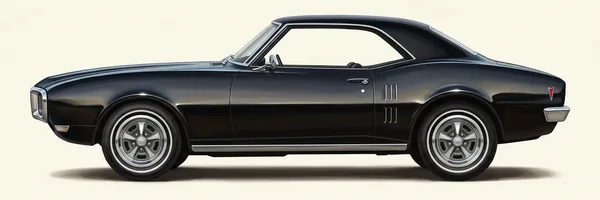
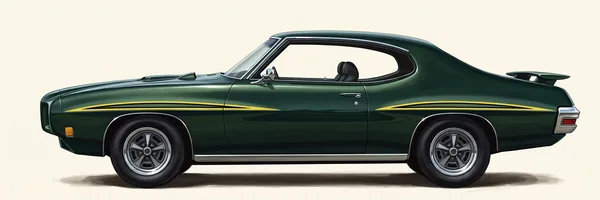
Pontiac Firebird
6 rulings, 5 still open.
Open
1967 Firebird production
- 67,032 hardtops and 15,528 convertibles, 82,560 in all123124
- 67,032 hardtops and 15,526 convertibles, 82,558 in all (our sum)125one source
Our ruling: Unresolved, leaning to 82,560. Over-Drive's table and Wikipedia have 15,528 convertibles, Consumer Guide 15,526. We cannot show that Over-Drive and Wikipedia counted independently; Wikipedia's 1967 column cites Gunnell's Illustrated Buyer's Guide, and Over-Drive gives no source. Consumer Guide's lowest 1967 weight, 2,955 lb, is Over-Drive's table's, not Pontiac's 2,951, so Consumer Guide and Over-Drive's table may share an origin, and 15,526 may be a copying slip within one chain.
Open
The 1968 Ram Air II's rating
Our ruling: Unresolved. Wikipedia, citing Sessler's Firebird Red Book, and Over-Drive's engine list give the Ram Air II 340 hp; Consumer Guide gives 335, «25 below the comparable GTO unit», which would put the GTO's Ram Air II at 360 hp (our arithmetic); the GTO's own Ram Air II rating is an open ruling on the GTO pages. Pontiac's AMA sheet of August 1967 predates the engine and lists the Ram Air at 335 hp.
Open
1969 Firebird production
- 75,362 hardtops, 11,649 convertibles, 689 Trans Am hardtops and 8 Trans Am convertibles, 87,708 in all124one source
- 76,059 hardtops including the 697 Trans Ams and 11,649 convertibles, 87,708 in all (our sum)125one source
- 75,363 hardtops, the rest the same, 87,709 in all127one source
Our ruling: Unresolved, leaning to 87,708. Wikipedia, citing Sessler's Firebird Red Book, counts 87,708, and Consumer Guide's rows add up to the same (our sum). But Consumer Guide's 76,059 hardtops are exactly 75,362 + 689 + 8, Wikipedia's own rows with the 8 Trans Am convertibles in a hardtop row (our arithmetic), so the two cannot be shown to be independent. Over-Drive's table keeps the Trans Ams apart as Wikipedia does and has one hardtop more, 87,709 in all. The same standard as for 1967 applies: two against one, independence not shown.
Open
Trans Ams with the Ram Air IV
Our ruling: Unresolved, leaning to 55. Consumer Guide's text and Over-Drive say 55 Trans Am coupes had the Ram Air IV; a photo caption in the same Consumer Guide profile says 63.
Settled
How many 1969 Trans Ams
Our ruling: 697: 689 hardtops and 8 convertibles (our sum). Consumer Guide gives 697 three times, in its specification box, in its model article and in one sentence of its profile, and once «697 coupes and eight convertibles», so it disagrees with itself three to one. Wikipedia, citing Sessler, and Over-Drive's table give the split 689 + 8. We cannot show those sources are independent, but none stands firm on another figure.
Open
The price of the 1969 Trans Am package
Our ruling: Unresolved, leaning to $725. Consumer Guide and Over-Drive give $725 over the base car; Wikipedia, citing a 2013 Hemmings Motor News article, gives $1,083. Over-Drive's own Trans Am hardtop row, $3,556, less $725 gives $2,831; less $1,083 it would give $2,473, $308 below the 1968 hardtop's $2,781 (our arithmetic). What else the $1,083 included is not known.
Chevrolet Chevelle
7 rulings, 1 still open.
Settled
1968 SS 396 production
Our ruling: 55,309 sport coupes. The Chevelle Report's three rows add to 62,785 (our sum), exactly Consumer Guide's total. Wikipedia's three figures add to 67,975 (our sum). Its 60,499 is exactly 55,309 plus the 5,190 El Caminos (our arithmetic), which suggests the pickups are counted in the sport coupes and again on their own; no source says so. Consumer Guide confirms the total, not the split.
Settled
1968 SS 396 sport coupe price
Our ruling: $2,899, Chevrolet's suggested retail price in its schedule revised 22 April 1968; Wikipedia gives the same, and so does Consumer Guide's own specification table. Consumer Guide's text says $2,875, which is on no GM page we have; we do not know where it comes from.
Settled
1968 Chevelle production
Our ruling: 464,669 with the El Camino, 422,878 without it (our sum). Over-Drive's rows are The Chevelle Report's and add to 464,669 by our arithmetic, and so do its own column totals, 82,845 and 381,824 (our sum), so its 464,699 is a typo. The Chevelle Report's own subtotal for two-seat V8 wagons, 30,117, is 60 short of its rows (30,177, our sum), and its eight-cylinder total of 381,824 uses the right figure. Because Over-Drive repeats The Chevelle Report row for row, the two count as one source.
Settled
1969 COPO 427 Chevelles
Our ruling: About 323, with 99 for Yenko Chevrolet. Consumer Guide counts 323; Wikipedia gives 323 as an estimate and as the number of COPO orders. GM's 1969 kit does not mention the COPO cars.
Settled
The 375-hp 402 (L78) in 1970
- Its AMA specification sheet of 15 October 1969 lists a 375-hp Turbo-Jet 396 (402 cu in), Z25/L78, for the Malibu sport coupe, convertible and El Camino; its engine table of September 1969 and power-team page leave it out137one source
- RPO L78 at $385.50, and the SS 396 package with the L78 at $210.65138one source
- A 375-hp cowl-induction version was available but few were sold134one source
Our ruling: Listed. GM's own AMA specification sheet of 15 October 1969 gives the 375-hp 402 as Z25/L78 for the SS 396 cars, although GM's engine table and power-team page leave it out. Over-Drive lists it at $385.50 as an engine option and at $210.65 for the SS 396 package with it, and Wikipedia says few 375-hp cars were sold. No source we have counts the cars.
Settled
The 1971 LS6
- Listed at 425 hp in Chevrolet's price schedule of 1 March 1971, and in its engine list revised January 1971 (codes CPZ and CPY)139one source
- Never released for public sale140one source
- Dropped early in the model year; no official record of any built134one source
- Listed among the engines at 425 hp141one source
Our ruling: Listed but not released for sale. GM still listed the LS6 in its engine list revised January 1971 and its price schedule of 1 March 1971, although Wikipedia says it was dropped early in the model year. Consumer Guide says it was never released for public sale, and Wikipedia that no official record shows a 1971 Chevelle built with one. None of our sources shows a car built or sold. Over-Drive lists it without comment.
Open
1972 Malibu sport coupe price
Our ruling: Unresolved. We show Chevrolet's price schedule of 1 December 1971. Wikipedia's $2,923 carries no citation and is on no GM page we have; it may be the price at the start of the model year, before a rise, but we have no schedule from that time to check.
Chevrolet Nova
10 rulings, 9 still open.
Open
1968 Chevy II Nova production
Our ruling: Unresolved. Nova Resource's rows add up to 183,552. Over-Drive's sedans are Nova Resource's figure to the car and its coupes differ by one digit, so it is a copy with a typing difference, not a separate source. Consumer Guide's «201,000 (approx.)» and Wikipedia's conceptcarz figure of 201,005 are close to each other and far from Nova Resource's. Nova Resource marks the rows behind its total «(+) Includes Acadians»; whether that explains the gap is not known. We show Nova Resource's rows.
Open
1968 Nova SS production
Our ruling: Unresolved, leaning strongly to 5,571. The reprinted book chapter's own engine split, 4,670 + 667 + 234, adds up to it (our sum). Old Cars, Wikipedia (citing Quentin Willson's Great Cars) and Over-Drive, which calls its figure an educated estimate, give the same number, but none of them can be shown to be independent of the chapter. Consumer Guide's 6,571 differs in one digit and has no split.
Open
1968 Nova SS price
- $210.65 with the 295-hp 350, on the V8 coupe (price schedule revised April 22, 1968)149one source
- US$312, for an SS that now included a 295-hp 350 V8 with heavy-duty suspension and other performance hardware146one source
Our ruling: Unresolved, leaning to GM's $210.65 from its own price schedule. GM prints $210.65 against the 295-hp 350 under the SS option; Wikipedia's $312, citing Flory's American Cars 1960–1972, is for the SS with the 350, heavy-duty suspension and other hardware, so the two may cover different contents.
Settled
The 1969 350s: 250 hp or 255 hp
- L65, 250 hp, 2-barrel, in the power-team chart and the price schedule150one source
- LM1, 255 hp, Four Barrel, on the engine data page of September 1968150one source
- 2,207 with the 255-hp 350 (LM1) and 5,922 with the 250-hp 350 (L65)143one source
- a two-barrel 350 of 255 hp146one source
Our ruling: Two engines. GM's own 1969 kit lists the 2-barrel L65 at 250 hp and the 4-barrel LM1 at 255 hp, and Nova Resource counts them separately; Wikipedia's 255-hp two-barrel mixes the two. Both are in the engine table.
Open
1969 Nova production
Our ruling: Unresolved. Nova Resource's rows add up to 251,849; the reprinted book chapter gives 268,011 without a breakdown. Neither says what it includes. Wikipedia's table gives 251,900, which looks like Nova Resource's figure rounded and is not counted separately.
Open
1969 Nova SS production
Our ruling: Unresolved, leaning to 17,564. The reprinted book chapter says 17,564 and Old Cars 17,654; the two differ by two swapped digits and may come from the same list. Nova Resource's 17,564 is the chapter's and is not counted separately; its engine rows (L48, L34, L78) add up to 17,565 (our sum).
Open
1969 Nova SS price
Our ruling: Unresolved, leaning to GM's $280.20 from its own 1969 price schedule. Wikipedia's $312 cites Flory and does not say what it includes.
Open
1970 Nova production
Our ruling: Unresolved. Nova Resource's body rows add up to 307,280, but its engine columns add up to 307,056 (our sum), 224 fewer. Wikipedia's 254,242 is «sold», not built, and has no source; its conceptcarz table gives 315,122. Nova Resource marks the rows «(+) Includes Acadians».
Open
1971 Nova SS production
Our ruling: Unresolved: one car apart. The reprinted book chapter says 7,016 and Old Cars 7,015. Nova Resource has both: 7,015 in its SS column and 7,016 for the L48, which includes Acadians, so the chapter's figure may be the engine count (a guess, not measured).
Open
1972 net ratings of the 307 and the 4-barrel 350
- F – V8-307 (130 H.P.), K – V8-350 (200 H.P.), on the serial-number page; 200-hp Turbo-Fire 350 in the price schedule151one source
- 307: 140 net hp; 350 L48 four-barrel: 210 net hp, on the engine data page of September 1971151one source
- the SS 350 «now rated an even 200 net»147one source
Our ruling: Unresolved. GM's 1972 kit disagrees with itself: its serial-number and price pages give 130 and 200 hp, its engine data page 140 and 210. The reprinted book chapter gives the SS 350 as 200. We show both.
Dodge Challenger
19 rulings, 17 still open.
Open
The T/A's base price
Our ruling: Unresolved. We show $4,056 from Over-Drive's table; J.D. Power's price guide gives the same, but its 1970–71 prices match Over-Drive's table on every row, so the two are one chain. Consumer Guide's T/A profile gives $4,480 without saying what it includes.
Open
1970 Challenger production
Our ruling: Unresolved. We show Consumer Guide's rows, the only set with a named source (Langworth's Encyclopedia of American Cars, 1984). Over-Drive's table shares those rows and adds up too, but not independently. By our arithmetic Over-Drive's 14,889 R/T hardtops are Consumer Guide's 12,747 plus its 2,142 T/As, and Over-Drive's 85,431 is Consumer Guide's total plus exactly its own 2,399-car T/A row, so the T/A looks counted twice. Wikipedia's uncited rows reach its total only if the T/A is 2,399, not the 2,539 its table prints. Consumer Guide's own engine table is not clean either: its R/T hardtop installations add to 13,333 (our sum), more than the 12,747 R/T hardtops in its production table. Wikipedia's figures are lower than Consumer Guide's in every year from 1970 to 1974, and no source explains why.
Open
When the Deputy came, and what it was called
Our ruling: Unresolved. Dodge's 1971 catalog calls the cheapest 1971 car the Challenger Coupe and does not use the name Deputy. Wikipedia puts the Deputy in the middle of 1970, Consumer Guide in 1971, and Over-Drive's 1970 table has no coupe row. We describe the 1971 car under the catalog's name.
Open
Who designed the Challenger
Our ruling: Unresolved. Consumer Guide names its source; Wikipedia's sentence has no citation. Over-Drive repeats Wikipedia's sentence and is not counted.
Open
What the 426 Hemi cost in a 1970 Challenger
Our ruling: Unresolved: $1,227.50 or $871, and neither source says what the price includes. We give no Hemi price in the tables.
Settled
Length and width of the 1970–71 Challenger
- 191.3 inches long, 76.1 wide166167
- 191.5 long, 76.5 wide, 51 high165one source
- «measuring 191 inches long, 76.5 inches wide, and 51.5 inches high», for the car as planned164one source
Our ruling: We use Dodge's own 1971 catalog, which Over-Drive's 1970 figures match: 191.3 by 76.1 inches, 50.9 high. Wikipedia's infobox has no citation, and Consumer Guide's figures describe the car as planned.
Open
How many T/As were built
- 2,142 (main article and production table)164one source
- «Number built: 2,539» (T/A profile; Wikipedia's table gives the same figure, and its T/A section cites this profile)163one source
- «A total of 2,399 T/As were made.»165one source
- «Challenger T/A ║ SS23 ║ None ║ 110 ║ 2-dr T/A Hardtop Coupe-4P V-8 ║ $ 4,056 ║ 3,377 ║ 2,399»161one source
Our ruling: Unresolved. Consumer Guide gives 2,142 in its main article and 2,539 in its T/A profile, which Wikipedia's table repeats (Wikipedia's T/A section cites that profile, so it is not a second source). Wikipedia's text and Over-Drive's production table give 2,399; Over-Drive's table is a separate document with price, weight and body code, though it shares Consumer Guide's other rows. Wikipedia's 1970 total only adds up with 2,399. The year page uses 2,142 so that its rows add up to Consumer Guide's total.
Open
The Windsor plant's letter in a 1970–74 VIN
Our ruling: Unresolved, and it does not matter much for the Challenger, which no source we have places in Windsor. We show R, as two of the three tables do.
Open
How many 1971 Challengers had the Hemi
- A 1971 R/T row of six figures under four engine headings: 465, 1,985, 129, 121, 59, 12164one source
Our ruling: Unresolved. The archived page has lost the table's layout, so it does not show which engine heading has no figures, and we give no 1971 Hemi count.
Settled
Did compression ratios go down for 1971?
- No: «Chrysler did not drop compression ratios this year like GM»164one source
- Yes, on the performance engines except the 426 and the 440 high performance165one source
- The 1970 and 1971 catalogs: 383 four-barrel 9.5:1 then 8.5:1; 318 8.8:1 then 8.6:1166170one source
Our ruling: Yes, on most engines. Dodge's own catalogs give the 383 Magnum 9.5:1 in 1970 and 8.5:1 in 1971, the two-barrel 383 8.7:1 and 8.5:1, the 318 8.8:1 and 8.6:1, the 440 Six Pack 10.5:1 and 10.3:1, and the Hemi 10.25:1 and 10.2:1, so Consumer Guide's sentence is wrong for the Challenger. The 1970 catalog's figure for the 340 reads 8.8:1, against the 10.5:1 that Over-Drive and Wikipedia give, so the 340 is left out of the comparison.
Open
Was $2,727 the coupe or the hardtop?
- $2,727 for the six-cylinder coupe, $2,848 for the hardtop161one source
- The Deputy «priced $121 less than the $2,727 standard hardtop»164one source
- $2,950 for the V8 hardtop, as in Over-Drive's table162one source
Our ruling: Unresolved, but we show Over-Drive's rows: J.D. Power's $2,950 for the V8 hardtop matches them (its prices follow Over-Drive's table, so it is not a second witness), and Consumer Guide's $2,727, which it calls the standard hardtop's price, is Over-Drive's coupe price.
Open
The price-class letter of a 1971 base Challenger
Our ruling: Unresolved: Over-Drive's table and its own text disagree, and we have no other source. The decoder shows both.
Open
Was there a 1971 SE?
- «The SE package was unchanged from 1970, but it was now limited to base models»164one source
- The SE was dropped as a model; its pieces became options171one source
- The SE was a 1970-only model165one source
Our ruling: Unresolved. Consumer Guide calls the SE a package in 1971, limited to base models; Over-Drive says it was dropped as a separate model and its pieces became options; only Wikipedia calls it 1970-only, citing a 1970 brochure. A package gets no row of its own in Consumer Guide's table, so the missing row settles nothing. We list no 1971 SE.
Open
1971 Challenger production
Our ruling: Unresolved. We show 29,883 from Consumer Guide's table. Over-Drive's table gives the same rows, but it shares Consumer Guide's rows (in 1970 its R/T hardtop row is Consumer Guide's R/Ts plus its T/As, and both group the 1971 coupe and hardtop as 23,088), so it is not a second witness. Against Wikipedia's uncited 26,299 that is one source against one, as in 1972–74.
Open
The 1972 base price
Our ruling: Unresolved. Neither Consumer Guide nor J.D. Power says which engine its base price assumes; in Over-Drive's 1970–71 tables the six-cylinder car is the cheapest, so presumably the same here (our inference). We show Consumer Guide's figure and give J.D. Power's in the note.
Open
1972 Challenger production
Our ruling: Unresolved. We show Consumer Guide's rows, which name their source and add up; Wikipedia's table has no citation.
Open
1973 Challenger production
Our ruling: Unresolved. We show Consumer Guide's figure; Wikipedia's has no citation.
Open
The 360's letter in a 1974 VIN
Our ruling: Unresolved. The decoder shows both letters for the 360.
Open
1974 Challenger production
Our ruling: Unresolved. We show Consumer Guide's figure; Wikipedia's has no citation. The two series also give different totals for the generation: 188,611 by our sum of Consumer Guide's years, 165,437 by Wikipedia.
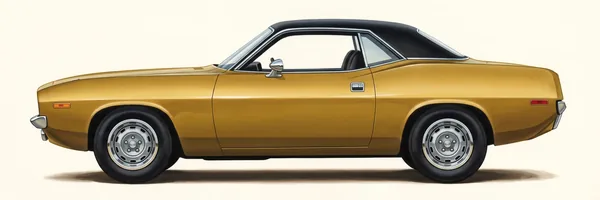
Plymouth Barracuda
14 rulings, 10 still open.
Open
How many 1970 'Cudas
Our ruling: Unresolved. Consumer Guide gives two different totals in two articles. plymouthbarracuda.net is close to the lower one. The 'Cuda variant page uses the year articles' rows, so that they add up to the year's total.
Settled
How many 1970 Hemi 'Cudas
- 652 hardtops and 14 convertibles; 666 in all175one source
- 284 and 368 hardtops, 5 and 9 convertibles (4-speed and automatic): 666 (our sum)176one source
Our ruling: 666: 652 hardtops and 14 convertibles. Consumer Guide and plymouthbarracuda.net agree, the latter split by transmission (our sums), and no source contradicts them. Their Hemi figures match car for car, so the two may share an origin.
Open
1970 Barracuda production
Our ruling: Unresolved. We show Consumer Guide's rows, which add up. Over-Drive's table repeats them row for row and is not a second count; its 94,207 is its own column of totals added up with the 55,499 subtotal inside it (our arithmetic), and its rows plus the AAR make 58,223. Whether the 2,724 AARs are inside Consumer Guide's 18,880 'Cuda hardtops no source says; plymouthbarracuda.net counts them among its 'Cudas. plymouthbarracuda.net's 48,867 is lower in every series, and Wikipedia's table repeats it. The site names no source and calls its figures a guideline.
Open
The AAR 'Cuda's base price
Our ruling: Unresolved. Over-Drive gives $3,966 in its table and its photo caption; Consumer Guide's AAR profile gives $4,340. Neither says what the price includes. J.D. Power's guide lists the AAR without a price. The same Over-Drive caption gives 2,742 cars against the 2,724 in its text and table, which weakens it as a witness.
Settled
The 1970 'Cuda's standard engine
Our ruling: 335 hp. Plymouth's own 1970 catalog rates the 383 four-barrel at 335 hp at 5200 rpm and the 440 four-barrel at 375; Over-Drive's engine table makes the 383 standard on the 'Cuda, and Consumer Guide's Hemi 'Cuda article and Wikipedia give 335 too (Over-Drive's text repeats Wikipedia and is not counted). That Consumer Guide's convertible article took the 440's 375 for the 383 is our guess.
Open
How many 1971 Hemi 'Cudas
- 59 and 48 hardtops, 2 and 5 convertibles (4-speed and automatic): 114, 7 of them convertibles (our sums)183one source
- 11 convertibles184one source
- 13 convertibles, seven of them sold in the United States182one source
Our ruling: Unresolved. Only plymouthbarracuda.net counts the hardtops (107, our sum). For the convertibles we have three figures, 7, 11 and 13; Wikipedia's «seven sold domestically» may be where the 7 comes from, but no source says so. Hagerty and plymouthbarracuda.net agree that two convertibles had four-speeds, which supports none of the totals.
Open
1971 Barracuda production
Our ruling: Unresolved. Consumer Guide's rows add to 18,690 (our sum). Over-Drive's table repeats them row for row, so it is a copy, not a confirmation, and its 30,778 again adds its subtotals to the rows (our arithmetic). plymouthbarracuda.net gives 16,492 with no breakdown for the plain Barracuda; its Gran Coupe and 'Cuda figures (1,331 and 5,675, our sum) are lower than Consumer Guide's.
Open
When the cheap coupe was sold
Our ruling: Unresolved. Plymouth's own 1971 catalog suggests the coupe existed in 1970, as Wikipedia says, but Over-Drive's 1970 table has no coupe, and neither Consumer Guide nor any other source we have counts one for 1970. Over-Drive's 1970 text repeats Wikipedia and is not counted.
Open
The 1972 'Cuda's standard engine
Our ruling: Unresolved. Plymouth's 1972 catalog makes the 340 standard on the 'Cuda in two places; Wikipedia says the 318 was, and plymouthbarracuda.net counts 1,946 'Cudas with the 318, but its split, 1,946 with the 318 and 5,864 with the 340, adds to 7,810 (our sum), 18 fewer than its own 'Cuda total of 7,828. From 1973 Plymouth's own catalogs make the 318 standard on both.
Open
1972 Barracuda production
Our ruling: Unresolved. The two sources agree on the 'Cudas and differ by 40 on the Barracudas; nothing says which figure is a misprint. plymouthbarracuda.net's own engine split for the 'Cuda adds to 7,810 (our sum), not 7,828.
Settled
A 1972 Gran Coupe
- the Gran Coupe was offered for 1970–1972173one source
- «two re-styled Barracuda models for '72»: «Number one is Barracuda», «Number two is 'Cuda»186one source
- 1972 production for the Barracuda and 'Cuda only173187
Our ruling: No separate 1972 Gran Coupe. Plymouth's 1972 catalog speaks of «two re-styled Barracuda models for '72», the Barracuda and the 'Cuda, and neither Consumer Guide's own table nor plymouthbarracuda.net counts a 1972 Gran Coupe; Consumer Guide's «1970-1972» in its text is not borne out by its figures.
Open
1973 Barracuda production
Our ruling: Unresolved. Both sources show production rising from 1972, but by different amounts. We show Consumer Guide's rows, as for the other years.
Settled
1974 Barracuda production
Our ruling: 11,734. Consumer Guide and plymouthbarracuda.net give the same two rows, and Wikipedia the same total, which is plymouthbarracuda.net's and not a third source. The two may still share an origin we cannot see.
Open
The VIN letter for the 1974 360
- J for the 360 four-barrel, L for a «Hi. perf.» 360190one source
- L for the 360 four-barrel with dual exhausts182one source
- the «high-performance» 360, with a four-barrel carburetor, optional on the Barracuda and 'Cuda191one source
Our ruling: Unresolved. The tpocr club's 1974 table of Plymouth codes has two four-barrel 360 codes, J and L («Hi. perf.»); Wikipedia gives L for the Barracuda's 360, and Plymouth's 1974 catalog calls it the «high-performance» 360 with a four-barrel carburetor, which leans toward L. No source we have ties the 245-hp engine to one code.