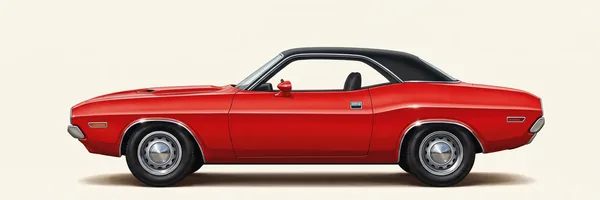
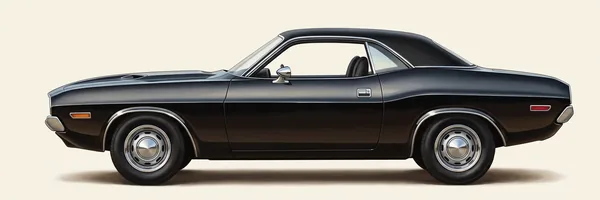
A 1974 VIN has 13 characters. Type one in, and the decoder reads it against the code tables on this page.
JH23G4B10000156 · An example built from the code tables on this page, not a real car's VIN: a 318 V8 hardtop, 1974, Hamtramck, unit 100001; the price-class H is one of Dodge's classes, used only to fill the position. None of our sources prints a real Challenger VIN.
The code table
Position
Meaning
J
Car line: Dodge Challenger
H · L · M · P · S
Price class: High · Low · Medium · Premium · Special (Dodge's classes for all its cars; which a Challenger used is not in our sources)
23
Body: 2-door hardtop
G · J · L
Engine (see the engine table)
4
Model year (1974)
A · B · C · D · F · G
Assembly plant (tpocr's table of Dodge's codes)
100001 →
Sequential unit number
Where to find it: On a plate on the left top of the dash, visible through the windshield.57
Every conflict we found for 1974, and how we settled it. All rulings.
Open
1974 Challenger production
Our ruling: Unresolved. We show Consumer Guide's figure; Wikipedia's has no citation. The two series also give different totals for the generation: 188,611 by our sum of Consumer Guide's years, 165,437 by Wikipedia.
Consumer Guide writes that Dodge was reluctant to spend any more money on the Challenger than it absolutely had to. For 1974 Dodge presented it in a folder shared with the Dart, as a personal sporty car with all-vinyl bucket seats and a three-on-the-floor stick shift as standard. Wikipedia notes that Dodge's factory-backed Kit Car program for short-track stock car racing offered the Challenger and built fewer than 12; when the Challenger line ended in 1974, the program moved to Dart Sport and Aspen bodies on a steel-tube chassis. The pony car field thinned out behind it. Consumer Guide notes that after 1974 only the Camaro and Firebird were left, and that GM kept them going as personal, affordable, semi-sporting cars, the very idea behind the Challenger.134
The rear bumpers were strengthened to take 5-mph knocks, as the law now required, with larger rear bumper guards. Little else changed.14
A 360 four-barrel V8 with 245 hp net replaced the 340 as the performance option; the 318 stayed standard.134
Production stopped in late April 1974, a few months into the model year. Consumer Guide counts 16,437 cars; Wikipedia's table gives 11,354.14sources disagree
Over five years Wikipedia counts 165,437 first-generation Challengers. Consumer Guide's yearly figures add up to 188,611 (our sum).14sources disagree
The story of the year
Too late, not too weak
Consumer Guide's verdict is that the Challenger was not a weak pony car but a late one: it arrived just as demand for such cars began to fade. Wikipedia makes the same point: the segment was already declining when the Challenger came.14
The name came back for 1978 on a rebadged Mitsubishi (the Galant Lambda, by Wikipedia's link), and again in 2008.4one source
How to spot a 1974
What tells it apart from a 1973.
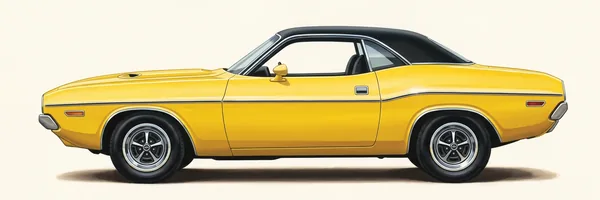
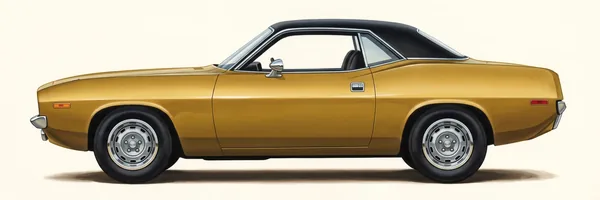
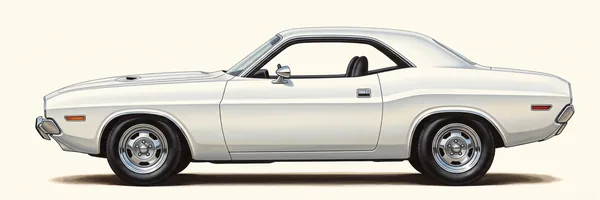
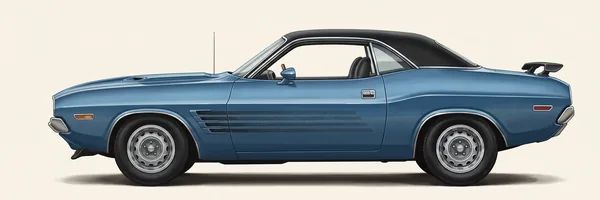
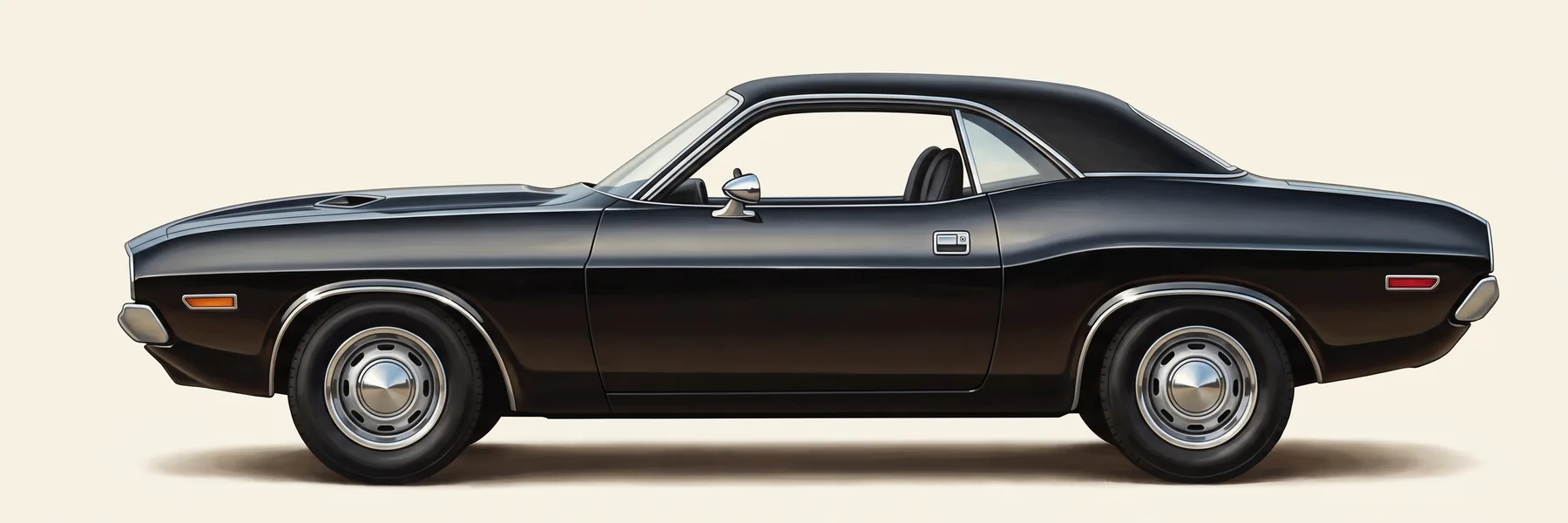
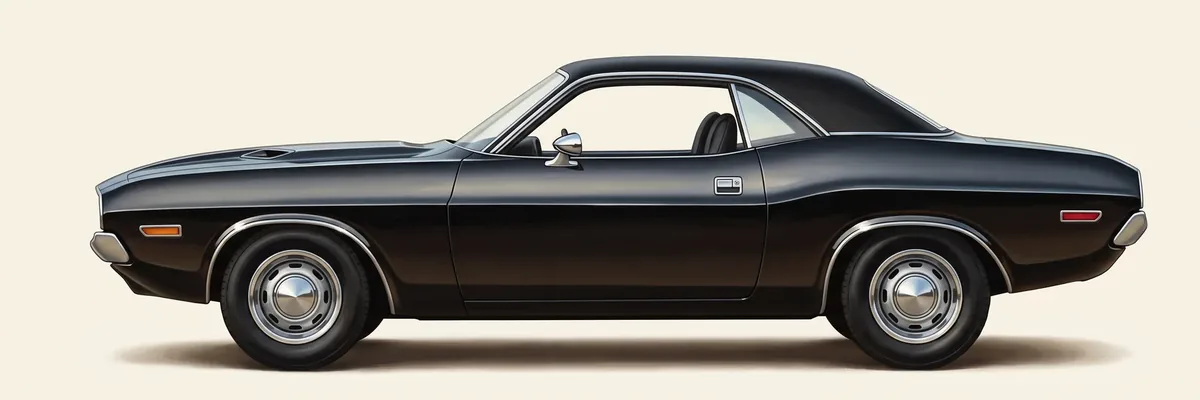
The 1974 from the side.The 1973, for comparison
Larger rear bumper guards
The rear bumper guards are larger than on the 1973, for the new rear 5-mph rule.14
Ten of the 16 colors are new; only Gold Metallic, Dark Gold Metallic, Parchment, Bright Red, Eggshell White and Black carry over from 1973, by our comparison of the two catalogs.38one source
16 factory colors. The color names come from one source3one source; the swatches are approximate screen colors, not paint matches.
Gold MetallicJY6
Dark Gold MetallicJY9
Sienna MetallicKT5
Dark Moonstone MetallicKL8
Burnished Red MetallicGE7
Frosty Green MetallicKG2
Avocado Gold MetallicKJ6
Deep Sherwood MetallicKG8
Lucerne Blue MetallicKB5
Powder BlueKB1
Yellow BlazeKY5
Golden FawnKY4
ParchmentHL4
Bright RedFE5
Eggshell WhiteEW1
BlackTX9
No source we have gives the number of cars per color, so the counts are left empty. The 16 colors are the chart in Dodge's 1974 folder, which is headed «Dart/Challenger exterior colors» and so is shared with the Dart. Three codes (KL8, KB5, FE5) were read off the image, where OCR read 5 as S and 8 as B.
16,437 by the count we use: 16,437 hardtops. The sources disagree on the total; the ruling on this page explains which figure we show and why.14sources disagree
How can you tell a 1974 Challenger from a 1973?
Three signs, each explained under «How to spot» on this page: larger rear bumper guards; a 360 instead of the 340; a new color chart.1348
What engines did the 1974 Dodge Challenger have?
Two engines, from the 318 cu in V8 to the 360 cu in V8. The engine table on this page gives every code and rating, and the rulings cover the disputed ones.13456
How much did a 1974 Dodge Challenger cost new?
Base retail prices, before options: hardtop $3,143.2one source
What colors did the 1974 Dodge Challenger come in?
Dodge Division, Chrysler Corporation lists 16 factory colors.3one source
Where is the VIN on a 1974 Dodge Challenger?
On a plate on the left top of the dash, visible through the windshield.57